Clinical intervention reference

Non-surgical and surgical technique reference

INTERVX SYSTEMS® provides comprehensive, expert-reviewed technique breakdowns of medical procedures across all specialties. Decades of procedural information remains dispersed across journal literature, textbooks, and apprenticeship-based training. INTERVX SYSTEMS® consolidates this knowledge into a single, structured resource built for clinical use.

Sign up for updates and exclusive early-access discounts
SpecialtyAll specialties
AreaAll areas
TagAll tags
SortDescending
SearchSearch interventions

Laparoscopic Cholecystectomy

Intermediate

Minimally invasive removal of the gallbladder using laparoscopic access, most commonly performed for symptomatic gallstones, cholecystitis, or biliary colic.

General Surgery · Laparoscopy · Hepatobiliary system · Intermediate · 60 min · Imaging optional


Laparoscopic Hartmann's Procedure

Advanced

Minimally invasive sigmoid or rectosigmoid resection with end colostomy formation, commonly performed for complicated diverticulitis, obstruction, perforation, or malignancy.

Colorectal Surgery · Laparoscopy · Gastrointestinal system · Advanced · 180 min · Imaging required

Soave's Procedure

Advanced

Endorectal pull-through operation for Hirschsprung disease, removing aganglionic bowel while preserving the muscular rectal cuff.

Paediatric Surgery · Pull-through procedure · Gastrointestinal system · Advanced · 180 min · Imaging optional

Evidence inputs

Built from trusted clinical sources

Articles begin with structured searches and source appraisal across recognised biomedical databases and evidence libraries.

Embase
PubMed
Cochrane Library
Web of Science
Scopus
Cinahl
NCBI Clinical Trials
New England Journal of Medicine
Embase
PubMed
Cochrane Library
Web of Science
Scopus
Cinahl
NCBI Clinical Trials
New England Journal of Medicine
Technique BreakdownsINTERVX SYSTEMS® is the first company to provide comprehensive, up-to-date technical breakdowns of interventional procedures.
Clinician-obsessedINTERVX SYSTEMS® is designed by clinicians who understand the value of easily accessible evidence-based medicine.
Transparent ProcessesAll articles are created with full transparency, including funding sources, conflicts of interest, and peer review processes.
CME/CPD PointsEarn and track CME/CPD points for continuing education and professional development.

How it works

A connected workspace for procedural knowledge

INTERVX SYSTEMS® brings clinical reference, patient communication, documentation support, and learning records into a structured procedural interface.

DRAFT OUTPUT

Generate patient-ready explanations.

Turn structured procedural content into patient-facing summaries that preserve accuracy while improving communication.

UNIVERSAL REFERENCE

Search procedure knowledge by clinical need.

Move from indications to technique, complications, follow-up, and supporting evidence without switching sources.

CONTEXTUAL LEARNING

See procedural decisions in one connected workflow.

Relevant preparation, equipment, safety, and post-procedural considerations are organised around the intervention.

Clinical standard

Our editorial process

As a team of doctors, we believe in empowering colleagues with clear, evidence-based guidance to support safe, informed decision-making.

Systematic evidence acquisition

Articles begin with structured literature searches across Embase, PubMed, Cochrane Library, Web of Science, Scopus, CINAHL, and clinical trial sources. Identified sources are screened, appraised, and synthesised into article foundations.

Clinical expert revisions

Articles are shaped through direct collaboration with field-leading clinicians and academically trained researchers. Our clinical authors work alongside contributing experts to refine technique and validate decision points.

Peer-review process

Each article undergoes independent review by proceduralists to support accuracy, safety, and clinical reliability. Revision history is maintained to ensure accountability and transparency.

Principles

Evidence-based techniques

INTERVX SYSTEMS® references specific companies, devices and instrumentation in technical breakdowns, however, we hold no affiliations or endorsements with any commercial companies or higher degree research institutions. For the foreseeable future, our primary objective is to build an independent, unbiased, and clinically focused resource that serves the clinician.

Core principles
Objective, evidence-based
01

An independent company

INTERVX SYSTEMS® is an independent company with no affiliations or endorsements from commercial companies or higher degree research institutions. Our primary objective is to build an unbiased, clinically focused resource that serves the clinician.

02

Adaptive, technologically advanced

A continually maintained blend of modern technologies for speed and traditional web architecture for accessibility and reliability.

Structured for procedural clarity

Topics covered

Articles are built to support both quick reference and in-depth review for clinicians at all stages of learning and practice.

01

Procedural overview and key points

Concise summary of the procedure, key steps, and high-yield points in practice.

02

Indications, preparation, and planning

Clinical indications, patient selection, procedural planning, and preparation considerations.

03

Contraindications and patient selection

Identification of contraindications and criteria for patient selection.

04

Procedural steps

Detailed procedural steps with key technical decisions, workflow logic, and variations used in real practice.

05

Devices and instrumentation

Key devices, tools, and technologies used in the procedure.

06

Complications and risk management

Common and critical complications, their recognition, and evidence-informed management strategies.

07

Follow-up and outcomes

Expected outcomes, post-procedural care, and evidence-informed follow-up considerations.

08

References and further reading

Key references, further reading, and supporting evidence for the procedure.

Engineered for clinicians

Specialised features

INTERVX SYSTEMS® is designed to go beyond being a reference library and provide features that support clinicians in their everyday practice, from patient communication to clinical documentation and ongoing learning.

01

Patient brochures

Generate patient-friendly procedural summaries from structured clinical content, including indications, expectations, risks, aftercare, and follow-up.

Communication
02

Operative note templates

Copy structured operative note templates aligned with procedural workflow, supporting accurate and efficient clinical documentation.

Documentation
03

Save articles for reference

Save articles to your profile for quick reference, continued learning, and CPD tracking.

Clinical reference
04

New features coming soon

With continual feedback and development, we aim to build a growing suite of tools that help clinicians in their everyday practice.

Development

Application preview

Inside the INTERVX SYSTEMS® platform

A closer look at the clinical article interface, professional development tracking, and clinician workflow tools inside the application. Try it for yourself with a free account.

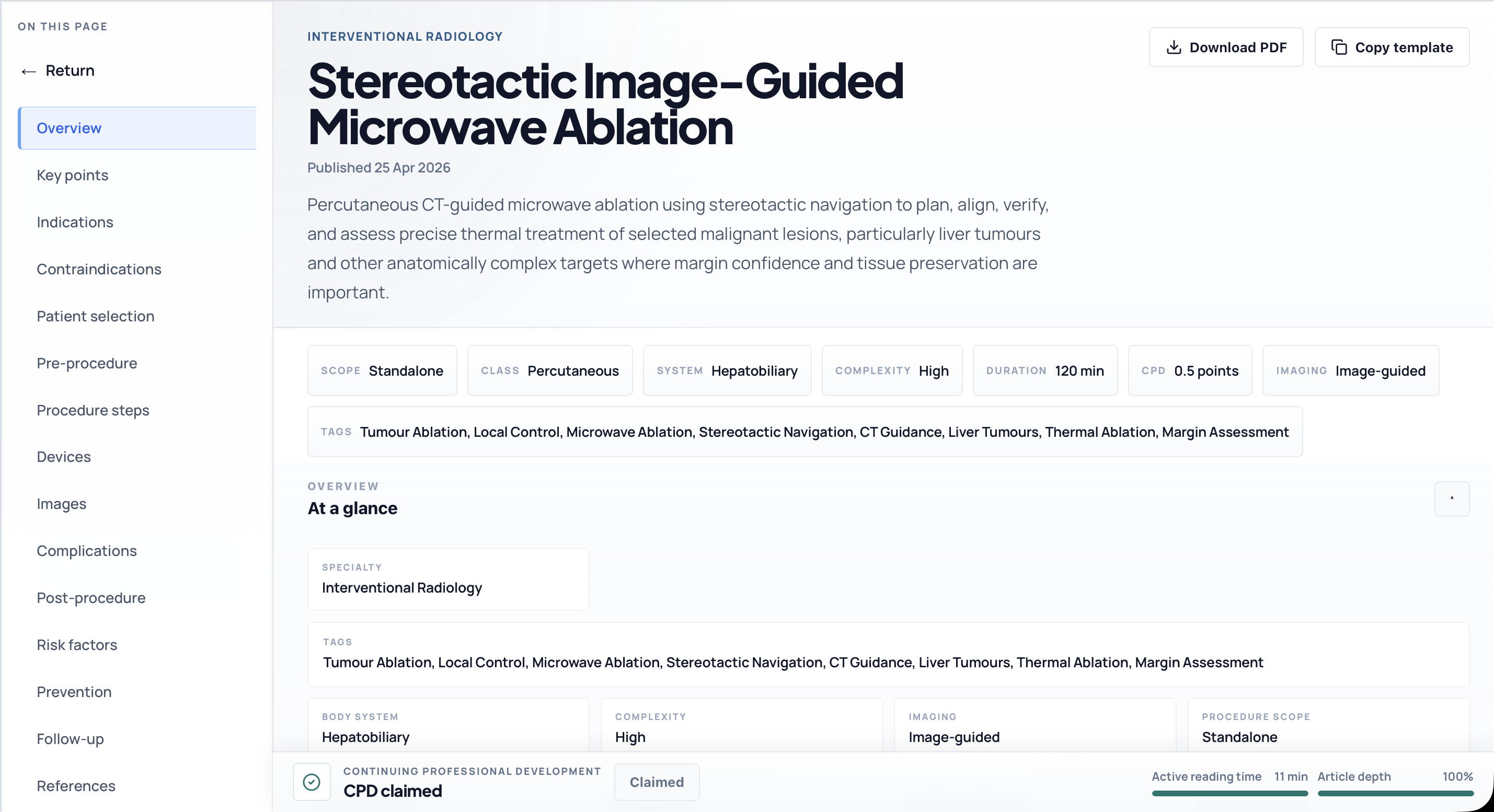
Structured article workspace

Structured article workspace

Procedure pages combine summary, article metadata, CPD progress, operative note templates, and patient-facing PDF outputs in one clinical workspace.

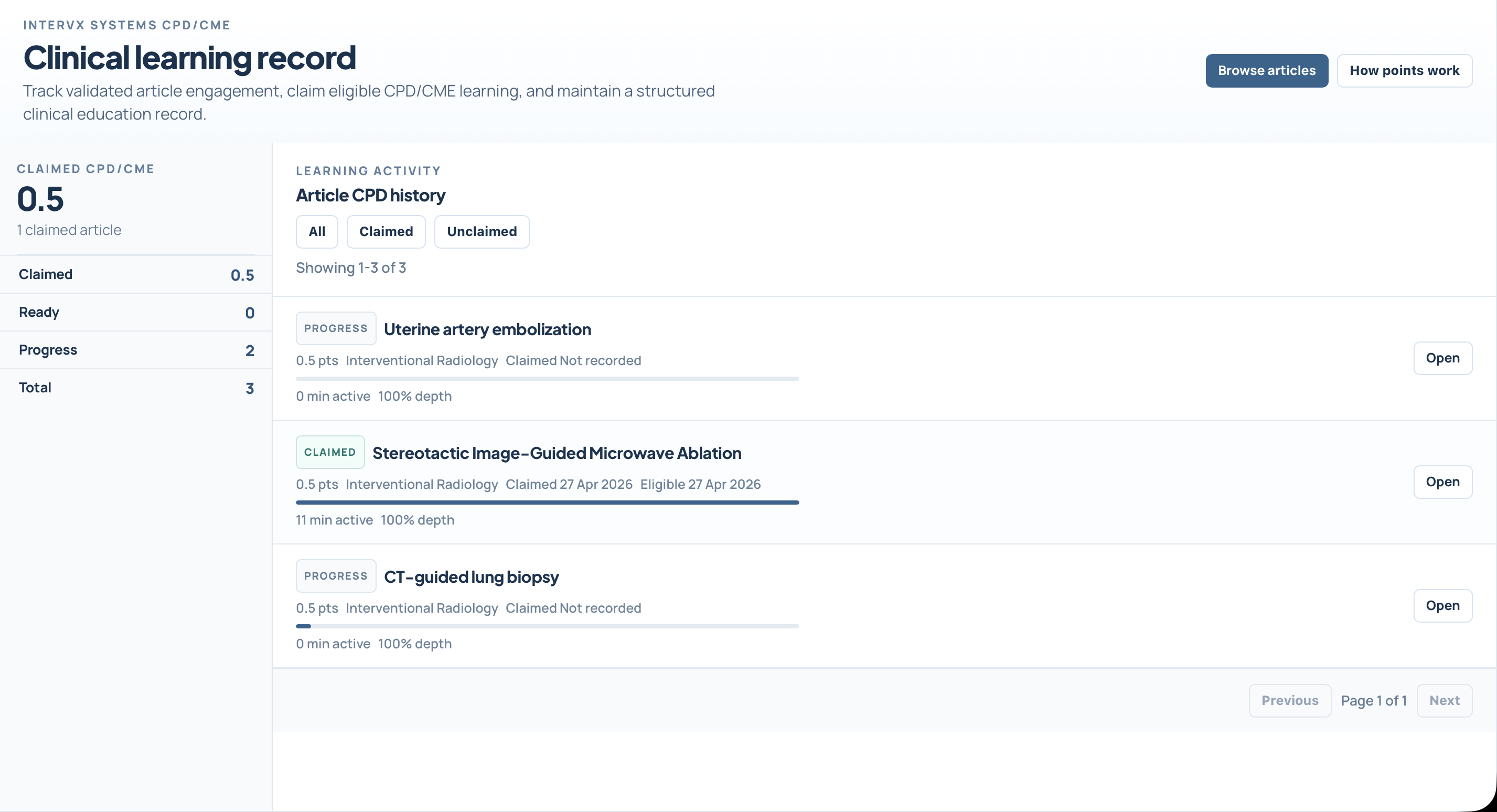
CPD and reading progress

CPD and reading progress

Article engagement, active reading time, completion depth, and claimed CPD activity are surfaced in context while clinicians read.

Professional development

Earn CME/CPD points through clinical engagement

INTERVX SYSTEMS® includes a proprietary CPD point tracking system that monitors meaningful engagement across procedural articles, structured reviews, and clinical learning activity.

Tracked learning is automatically recorded from article engagement, review depth, repeated reference use, and clinically relevant activity.

Contributors

Public contributions and careers

Interested in contributing to INTERVX SYSTEMS® or building a career with us? Gain experience in a unique, forward-thinking, technologically advanced company.

Contributor network

Building for the medical community

INTERVX SYSTEMS® actively seeks clinicians, PhD candidates, engineers or students in similar fields. We aim to foster a continued culture of learning by teaching. Contact our team with an introduction and our team will be in touch.

Review articles

Help assess procedural content for accuracy, clarity, and real-world clinical usefulness across your area of expertise.

Contribute articles

Support the development of new intervention articles and help strengthen coverage across specialties and techniques.

Receive recognition

Contributors are acknowledged within the contributors section of the articles they review or help develop, and active contributors may be eligible for lifetime complimentary access.

Access

Access the INTERVX SYSTEMS® reference platform

Early access for clinicians, trainees, and teams seeking a more rigorous standard of intervention reference.

Request access

Get updates from INTERVX SYSTEMS®

Join the early access list for a procedural reference platform built for modern clinical use.

An organisation for good

Reinvesting into the future of medicine

INTERVX SYSTEMS® is committed to supporting medical education. Profits are redirected back into the resource to strengthen continued development in technology, education, editorial systems, and access to structured intervention knowledge.

01

Resource reinvestment

Profits are redirected back into the platform to support continued development of clinical content, software infrastructure, and educational technology.

02

Medical education

INTERVX SYSTEMS® is committed to supporting medical education by making structured intervention knowledge more accessible to students. Every year, two students displaying exceptional dedication to their respective fields will be awarded a full-year access scholarship to the platform to support their learning.

03

Charity partnerships

We actively seek partnership with charities and non-profit organisations aligned with our mission to support global health outcomes through education and resource provision.

FAQ

Common questions

What is INTERVX SYSTEMS®?

INTERVX SYSTEMS® aims to address the gap in documentation on interventional procedures. It is designed to bring together indication, preparation, technique, complication management, outcomes, and follow-up into a single structured platform. The platform focuses on high-quality research presented in a format that is practical, clinically relevant, and fast to interpret.

Who is INTERVX SYSTEMS® intended for?

INTERVX SYSTEMS® is designed for students, clinicians, researchers, and multidisciplinary teams. This includes specialists performing procedures, trainees preparing for cases, clinicians reviewing management pathways, and teams seeking a shared reference for procedural planning and discussion. The aim is to support both rapid point-of-care review and deeper learning outside the procedure room.

How can you contribute to INTERVX SYSTEMS®?

We welcome contributions from clinicians with procedural expertise who are interested in helping to build and maintain the platform. This can include writing new articles, reviewing existing content, providing feedback on clinical accuracy, or sharing insights on emerging techniques and evidence. If you are interested in contributing, please contact us to learn more about how you can get involved.

What kind of content will the platform include?

The platform is intended to include intervention-focused entries across multiple specialties, covering both minimally-invasive and surgical procedures. Content will include concise procedural summaries, deeper technical detail, preparation and equipment considerations, imaging or access guidance where relevant, recognised complications, post-procedural care, and evidence-informed follow-up. Over time, coverage is designed to expand across a broad interventional landscape rather than being limited to a single domain.